
EXHIBITION
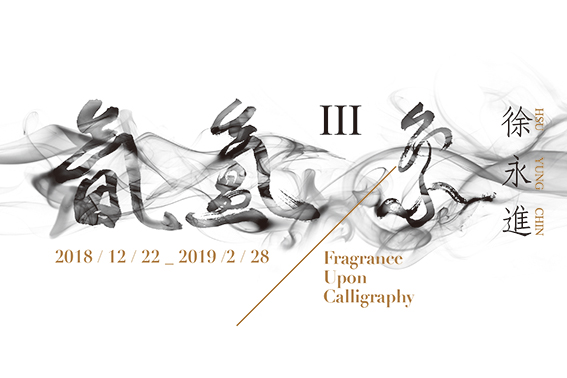
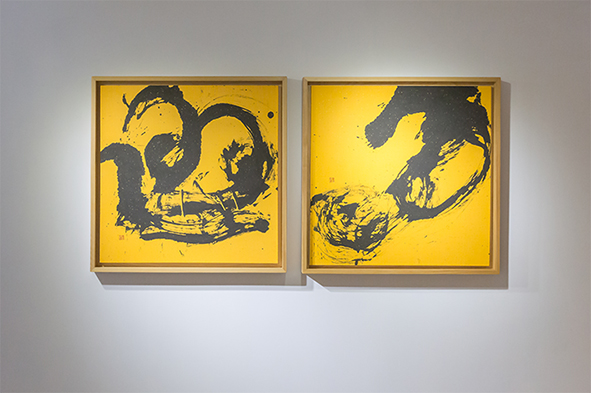
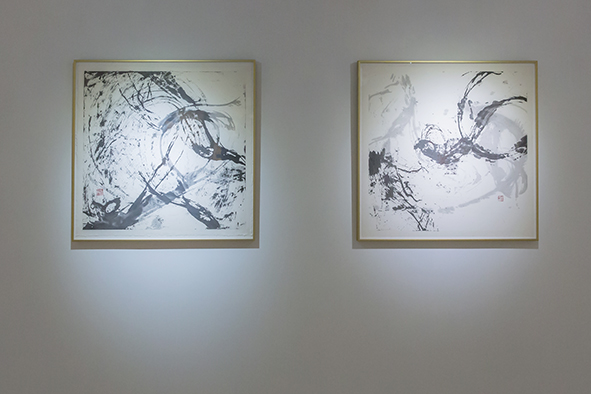
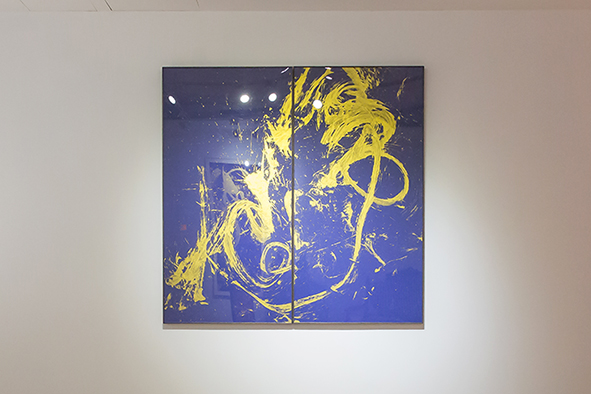
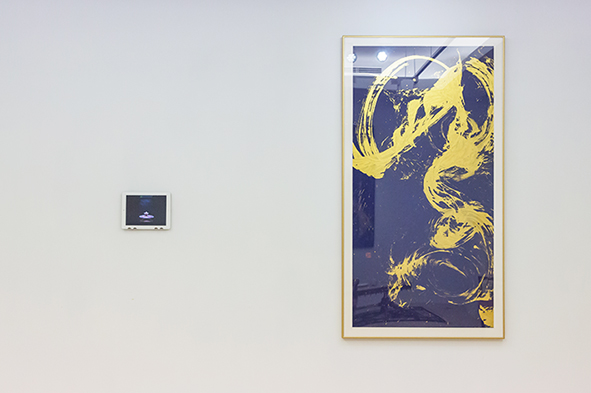
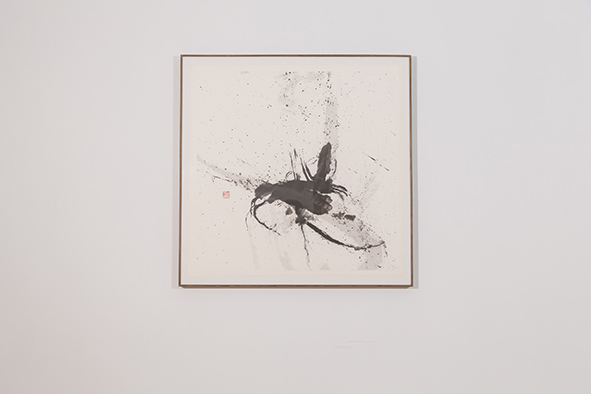
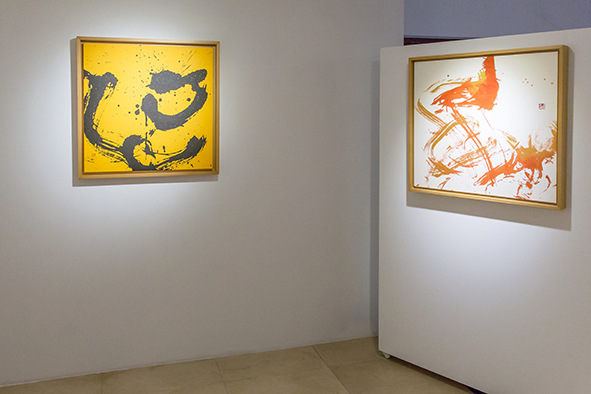
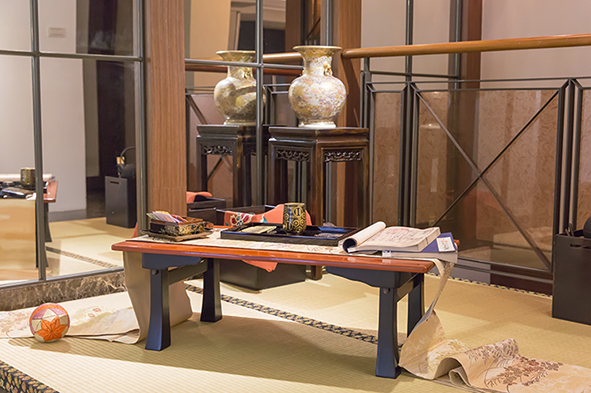
氤氳象---徐永進特展
藝術生態更迭至今,再古老的題材或媒材,⼀一旦冠上「當代」一詞,就如同出籠野獸,可以⼤鳴大放、形式不拘,越能打破「脈絡」,越能以效果教⼈驚艷,便越具有「當代性」,於是各種當代⽔墨、當代陶藝、當代XX,都能洋洋灑灑的論述各⾃的「當代性」。當代書藝,也是在這個脈絡中被探討,書法結合裝置、錄像、表演、漫畫,未來或許還能再產⽣書法AR/VR、AI智慧書法、書法3D列列印⋯⋯然⽽人們在⼀次次的「哇」中,逐漸感覺疲乏,當跨界與驚奇變成常態,被忽略的往往是最初透過異媒材實驗,想要開啟的是在當下時空重新體驗書法藝術的美妙,它甚至不是為了撰寫新的、東⽅專屬的藝術史,僅僅是為了喚醒⼈們對古老書法藝術的審美意識,僅僅是為了了讓傳承千年的藝術,存活到明天。
我們時常聽到專家們說出高深的專業術語:「氣韻⽣動、行氣飽滿、筆走龍蛇、⼀字⾒見心⋯⋯」但究竟是如何⼀字⾒心?怎麼樣能叫氣韻⽣動?當代書藝家之間常常落入諸如此類的比評,各自有各自的師承,各有各的標準,再繼續下去,便鑽入更深的高塔,⽽忘了了最重要的⼀一件事:當代。當代藝術裡對「當代性」已有許多的探討,其中⾃自然有許多歧異,然⽽不管持有什麼主張,⼤多數人都能同意具有當代性的藝術應該包含「對當下時空的思考與融合」,而要表現出這樣的思考,藝術家必須有著十分清明的存在覺知。早在清朝初年,石濤便揭竿倡導:筆墨當隨時代。但如今,除去媒材、形式、效果,等等顛覆傳統的驚艷創新之外,還能如何讓筆墨「隨時代」?這是這次展覽我們的核⼼思考課題之⼀。
徐永進老師可以說是最早進行當代書法實驗的藝術家,上述所舉的跨界嘗試,他幾乎都試過,也始終抱持開放態度,與各個不同領域的專家們合作,如與優人神⿎鼓的合作,如為觀光局或電影寫出富含意象的英文單字,以書法家姿態參與社會的甚⾄是政治的意象創造,九零年代即開始思考如何將⾃己的書法帶入未來。他的嘗試⾃然引起許多當代藝評注意,如鄭芳和老師即從後殖民主義的社會⼼理學⾓角度頗析當代書法家們的集體焦慮,也如白適銘老師從⽣物學種化⾓度肯定徐老師突破書法可讀性框架後所催生的非書非畫、亦書亦畫的新形式。書法的當代化似乎也打開了了書法評論的當代性,評論⻄西⽅當代藝術所使⽤的工具,原來也適⽤於東⽅古老藝術,熟悉這兩種藝術語境的觀眾必然能看出其中深刻之處,但對不熟悉的觀眾,卻可能只能感嘆眼前更高深的塔樓,不得其⾨而入。因此,如何順著徐老師解放書法的暗示,讓書法欣賞也受到解放,讓體驗不再局限於⼀時的「效果」,⽽能引導觀眾隨著徐老師作品進⾏自我探究,這是這次展覽的第⼆個課題。
於是我們決定打造的是⼀個聚焦於當下場域,抽象與實相兼具的劇場,在這個劇場裡,徐老師的作品所蘊含的種種線索與脈絡,都能以直觀的方式展現在觀眾眼前,我們無意築另⼀座⾼塔,⽽想開⼀扇門,歡迎觀眾進入徐永進老師的世界,領略箇中美妙,反芻前此所有⽤心良苦的藝評家們試圖告訴我們的內容。
高野美術的陳彥璋老師就如同這個劇場的藝術指導,浸淫於⽂物世界多年,深諳文物背後精深的哲理的他,卻能在古今中外文本中悠遊,在他的青⽥香墅裡把玩文物,時而論起動漫與星盤、時⽽穿越到古絲路或爬上高野山,再怎麼形而上的思想都能落地為現實,脈絡清晰條分明,聽他透過象數的易理詮釋香爐形制,教聞者拍案叫絕;見他透過古老香⽅的考究,演繹社會義理與倫常,無法不⼼心⽣生嚮往;這次展覽則是透過徐老師作品與陳老師的獨特香法,將「⽔墨書藝呈理而釋象,爐鼎香煙詮象⽽達理」的抽象思維具體展現為可觀可感的現下氛圍。
這次展覽分為三個展場:意識畫廊、綠境藝廊、⽔墨現場,三個展場各自演繹香爐、香道與香禪,透過陳老師精選的香爐與香,分別設計三種不同的體驗,引導進入徐老師氤氳⽽象的世界,觀者只要放鬆⼼心情、清淨思慮、步入展場、找個最⾃自在舒適的角落落,感受香與書法所共同演繹的「天地絪縕,萬物化醇」即可。It is difficult to explain to newcomers what good Chinese calligraphy should look like. Within the group I label newcomers, I include not only people who are from a non-Chinese culture, but also anyone who was raised to appreciate a western type of art, people like you and me. Despite attempts to bring this ancient art form into the modern world, by combining it with different mediums, performances, and technology, Chinese calligraphy is still losing its audience. When audiences expect calligraphy to be performed not appreciated after the fact, how can we teach people to understand the art before them? How can we motivate them to learn, appreciate, study and even collect calligraphy the way it has been for most of Chinese history? Is it true that, as some art critics declared in the 90s, the Chinese calligraphy is dead art form?
Hsu Yung-Chin, is an artist and calligrapher who has won almost every important calligraphy prize since joining calligraphy competitions as a young college student, he asked this, ‘Why should I continue writing if what I make will not last?’ He is one of the pioneers of modern calligraphy, and has always been open to mixing his work with other art forms, such as design, multimedia, installations, dance, and music. All of these varied experiments attracted the attention of contemporary art critics. One such critic, Cheng Fang-he, analyzed the collective anxiousness that she saw in calligraphy artists in the context of post-colonization. Yet another critic, Dr. Bai Shi-Ming, postulated that Hsu had created a new species of calligraphy and ink art. Because of Hsu’s allowance of modern ideas into calligraphy it became easier to interpret modern calligraphy using political, social, and biological terms. Terms which had until then had not been used when discussing calligraphy. Yet, for newcomers, calligraphy seems as difficult as ever to understand. So again I wonder, what does the future hold for calligraphy? Can it be understood through a modern critical lense, or must it be understood through the lense of history?
Which brings us to the core mission of this exhibition, bringing the experience of calligraphy firmly into the new. We will build a theater that enables the audience to experience the fragrance of the moment. Mr. Daniel Chen, who is the artistic director of this theater, will use his rich knowledge and varied collection of incense to create a fantastic mise en scène leading us to experience Hsu’s wonderful world. The exhibition will be set up in three venus: Yes Art Gallery, Rhythm Art Gallery, and Ink Now. At each venue, you will discover for yourself how to interpret (or not interpret at all) the art of Hsu’s calligraphy through incense burners (in Yes Art), incense ceremony (in Rhythm Art), or incense meditation (in Ink Now).
* A special thank you to Mr Chen Pei-Yun for composing the music for the exhibition.Also a big thank you to Mr. Sun Heedong (香山山齋) for the instruction to build incense meditation room.